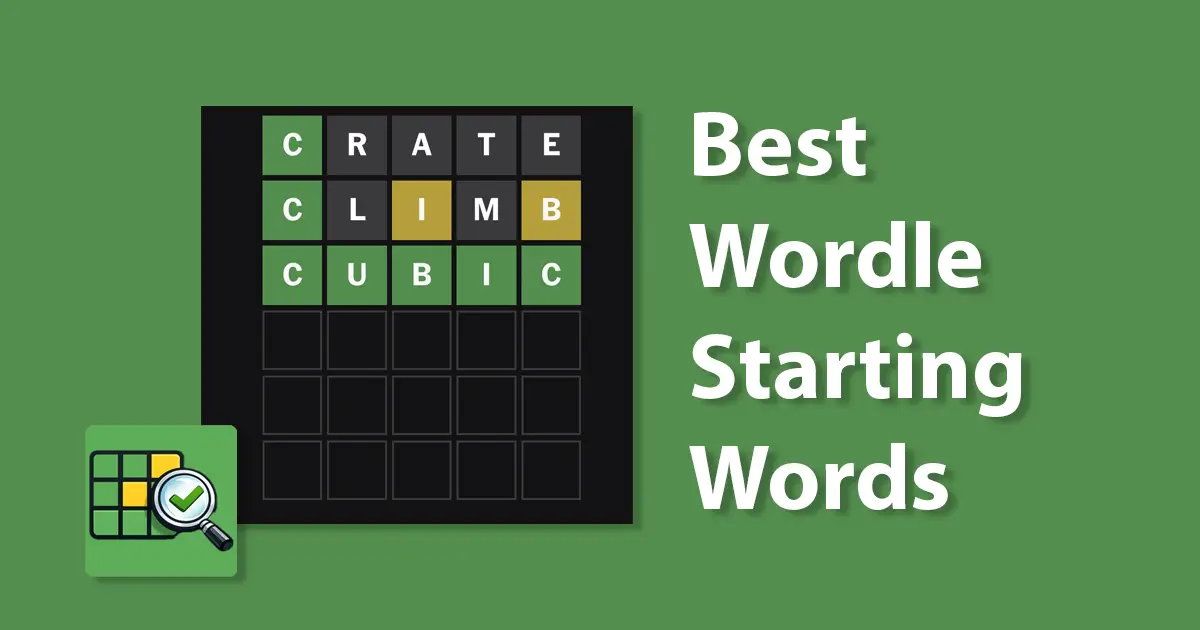
Best Wordle Starting Words 2026 (Ranked & Tested)
Best Wordle Starting Words 2026 (Ranked & Tested)
Choosing the right starting word can be the difference between solving in three guesses or struggling all the way to six.
After analyzing thousands of games, testing hundreds of word combinations, and studying letter patterns across the entire Wordle dictionary, I've compiled the definitive list of the best starting words for 2026.
Whether you're a beginner looking for consistency or an advanced player chasing lower averages (see our full strategy guide), this guide has you covered.
What Makes a Starting Word "Best"?
Before diving into specific words, let's understand what actually makes a starting word effective.
A great opening word does three things:
1. Tests high-frequency letters - Letters like E, A, R, T, and O appear in more words than Q, X, or Z
2. Balances vowels and consonants - Pure vowel words (like AUDIO) give information but rarely lead to fast solves
3. Avoids letter repetition - Using five unique letters maximizes the information you gather
The goal isn't to guess the answer immediately. It's to eliminate as many wrong possibilities as efficiently as possible.
Top 10 Best Starting Words (Ranked)
Based on mathematical analysis of over 12,000 possible Wordle answers, here are the statistically strongest openers:
1. CRATE
This is the gold standard for 2026.
Why it works:
Average solve rate: ~3.3 guesses
2. SLATE
A close second with nearly identical performance.
Why it works:
Average solve rate: ~3.3 guesses
3. SALET
The mathematical optimizer's choice.
Why it works:
Average solve rate: ~3.3 guesses
4. TRACE
Slightly more aggressive but equally effective.
Why it works:
Average solve rate: ~3.3 guesses
5. CRANE
The classic entropy leader.
Why it works:
Average solve rate: ~3.4 guesses
6. ARISE
The vowel-forward champion.
Why it works:
Average solve rate: 3.51 guesses
7. ROAST
Balanced and reliable.
Why it works:
Average solve rate: 3.53 guesses
8. ADEPT
Great for variety seekers.
Why it works:
Average solve rate: 3.54 guesses
9. STARE
Classic choice with proven results.
Why it works:
Average solve rate: 3.55 guesses
10. IRATE
The aggression option.
Why it works:
Average solve rate: 3.57 guesses
Alternative Strategies: Beyond the Top 10
Not everyone wants to use the same starting word every day. Here are category-specific recommendations:
For Maximum Vowel Coverage
For Consonant-Heavy Players
For Pattern Recognition
For Hard Mode Optimization
Letter Frequency: The Science Behind the Rankings
Understanding why these words work requires looking at letter distribution.
Most Common Letters in Wordle Answers
1. E - 1,230 occurrences (~10.7%)
2. A - 979 occurrences (~8.5%)
3. R - 899 occurrences (~7.8%)
4. O - 754 occurrences (~6.6%)
5. T - 729 occurrences (~6.4%)
Least Common Letters
Testing E, A, R, O, T early gives you information about ~40% of all letters in the answer.
Positional Letter Frequency Matters Too
Letters don't just appear—they appear in specific positions.
Position 1 (First Letter):
Position 5 (Last Letter):
Words like SLATE leverage this: S at position 1, E at position 5.
How to Build Your Perfect Second Word
Your starting word is only half the equation.
After your first guess, your second word should:
Best Second Word Combinations
If you start with CRANE:
If you start with SLATE:
If you start with ARISE:
Common Mistakes to Avoid
Even with perfect starting words, players make errors:
1. Reusing gray letters - Wastes guesses
2. Ignoring yellow placements - Move them, don't repeat positions
3. Guessing randomly - Every guess should test something new
4. Using obscure words - Stick to common vocabulary
5. Not thinking about word structure - Consider endings like -ER, -ED, -LY
Should You Change Your Starting Word?
The short answer: it depends.
Stick with one word if:
Rotate words if:
Many top players use the same starting word for months to perfect their follow-up logic.
2026 Meta: What's Changed?
Wordle strategy has evolved since its viral explosion in 2021-2022.
What's new in 2026:
The fundamentals remain the same, but execution has gotten sharper.
Final Recommendations by Player Type
Beginners
Start with CRATE or SLATE. Both are easy to remember and consistently effective.
Intermediate Players
Try SLATE or TRACE. Test different second-word combinations.
Advanced Players
Rotate between CRATE, SLATE, and TRACE. Focus on optimizing your second and third guesses.
Speedsolvers
ARISE or IRATE for aggressive vowel identification.
Quick FAQ
What is the statistically best Wordle starting word?
CRATE has the best average solve rate at ~3.3 guesses, followed closely by SLATE at ~3.3.
Should I use the same starting word every day?
Yes, if you want to optimize your strategy. Consistency helps you learn patterns faster.
Do vowels or consonants matter more?
Balance matters most. Two vowels and three consonants perform best statistically.
Can I still win starting with a "bad" word?
Absolutely. Any starting word can work—good ones just make it easier.
What starting word do experts use?
Most experts use CRATE, SLATE, or TRACE. But some rotate for variety.
The Bottom Line
The best Wordle starting word is the one that matches your playing style and goals.
For most players, CRATE is the optimal choice. It balances frequency, position, vowel-consonant ratio, and flexibility better than any alternative.
But Wordle isn't just about optimization—it's about enjoyment.
If AUDIO makes you happy or STARE feels comfortable, use it. The difference between the #1 and #10 word is only 0.15 guesses on average.
What matters most is understanding why your starting word works and building smart follow-up strategies.
Now you have the data. Choose your word, play consistently, and watch your average drop.
Happy solving!

Author
Md Sahadat Husain
Algorithm Expert & Lead Developer | Wordle Strategy Analyst | CCIE
I am a Computer Engineer and Competitive Programmer with a deep passion for algorithms. I built this Wordle Solver using Information Theory and Entropy Analysis to help players understand the probability math behind the game—guaranteeing smarter guesses and longer streaks.
As a Web Developer III at WPManageninja and a Cisco Certified Internetwork Expert (CCIE), I specialize in building high-performance applications. I apply this engineering rigor to ensure our solver is the fastest and most accurate on the web.
I am also the Founder of NextProTips, Devsdemy, and Top10Bests.com, teaching programming to over 100,000 students on YouTube and Udemy.
Ready to Solve Today's Wordle?
Use our powerful Wordle solver to find the perfect word and maintain your winning streak!
Popular Tools & Resources
Related Articles
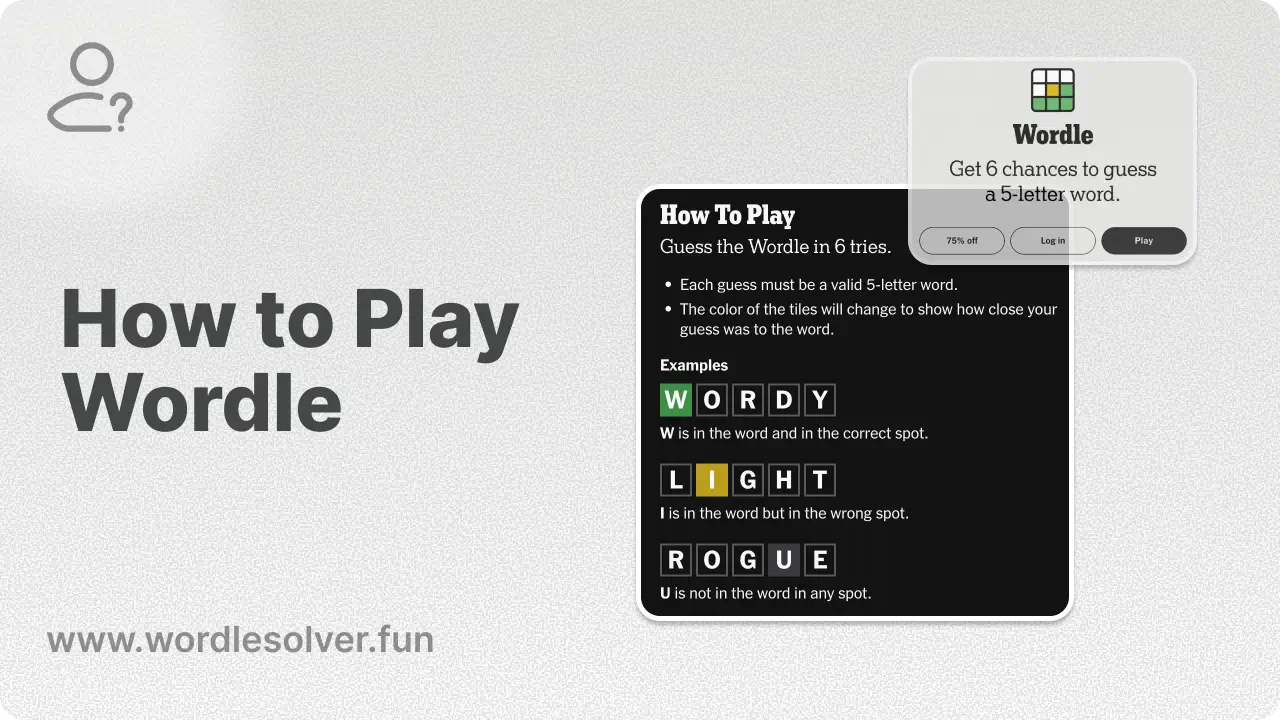
How to Play Wordle: Complete Beginner's Guide & Rules (2026)
Learn how to play Wordle step by step. Understand the rules, color tiles (Green, Yellow, Gray), best starting words, and winning strategies for the free daily NYT word game.
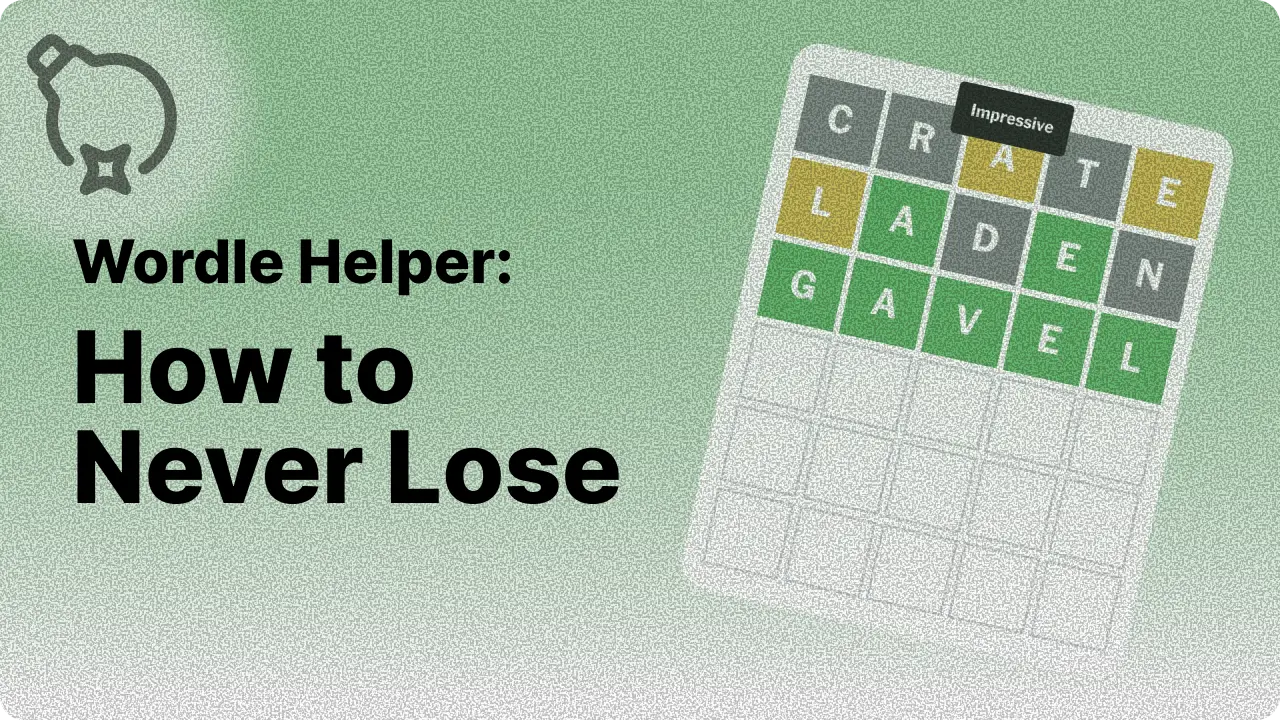
Wordle Helper: How to Never Lose Again (2026 Ultimate Guide)
Discover the best Wordle helper tools and strategies to maintain your streak. Learn how to use solvers strategically, improve your skills, and never lose at Wordle again.
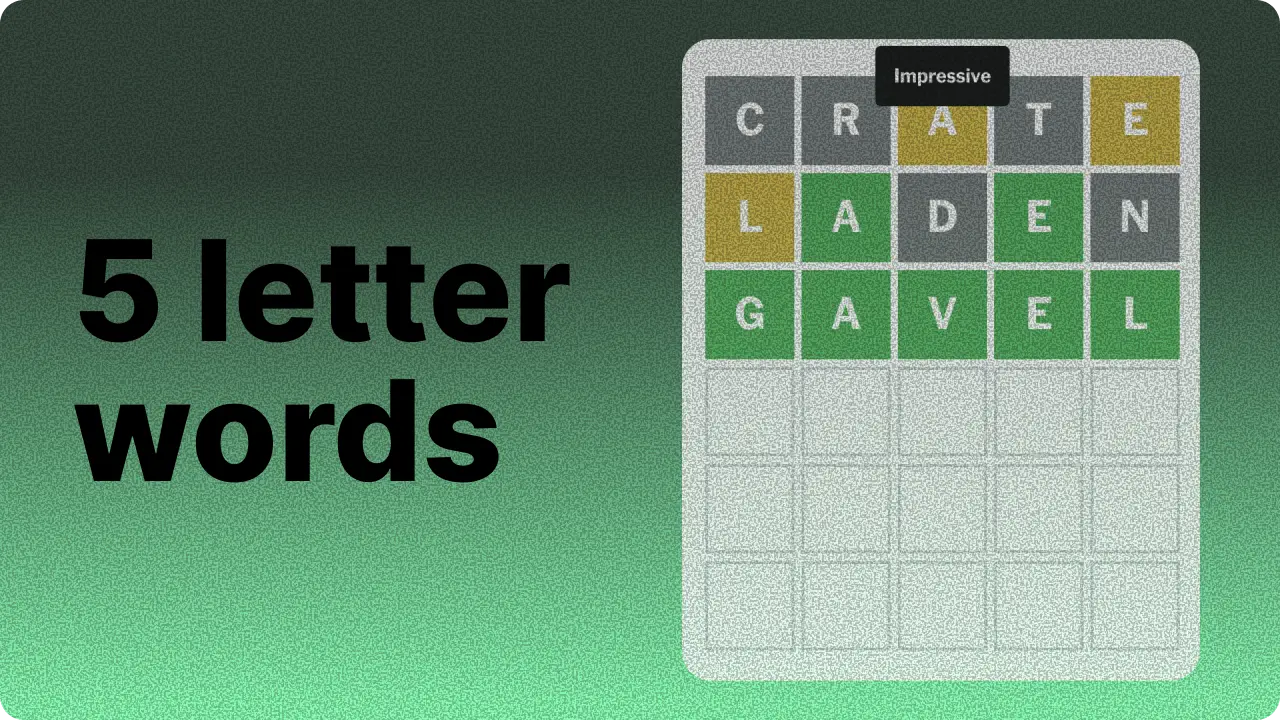
Complete Guide to Wordle 5 Letter Words: 12,000+ Five-Letter Words for Wordle (2026)
The ultimate guide to Wordle 5 letter words! Explore 12,000+ five-letter words categorized by pattern, frequency, and Wordle usage. Find the perfect word for any puzzle.