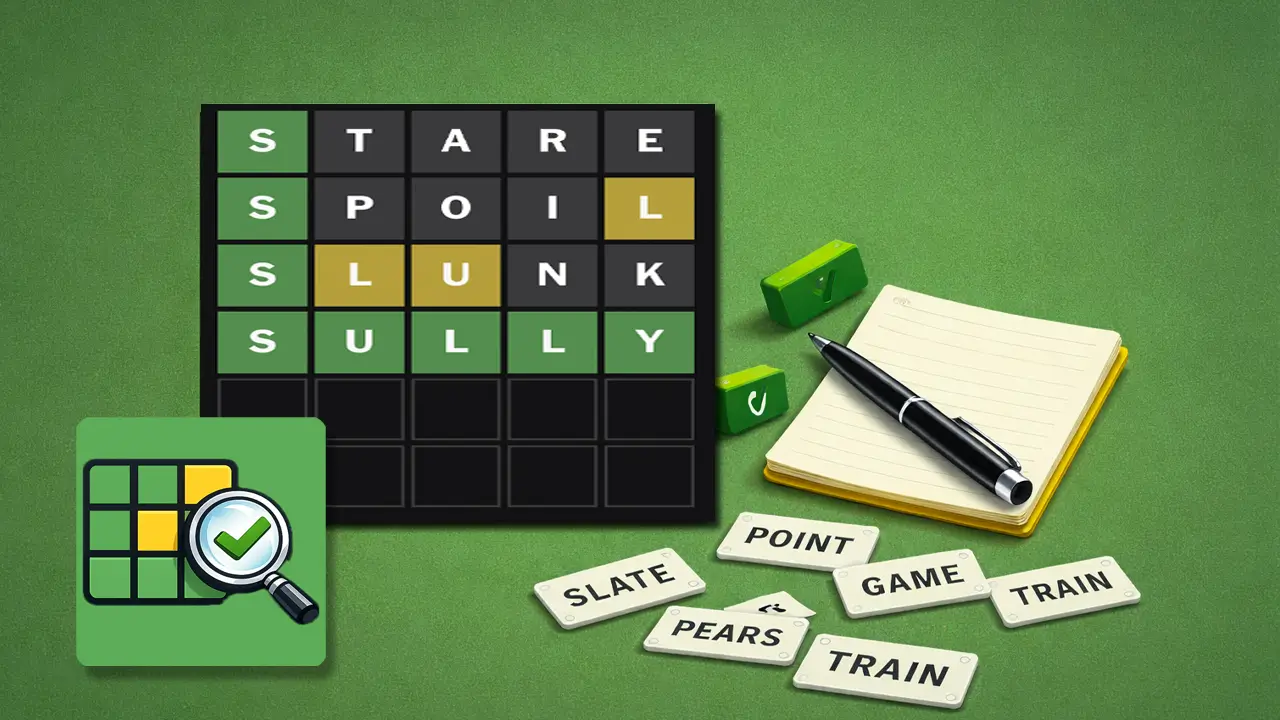
Master Wordle: The Ultimate Beginner's Guide (2026 Strategy)
Master Wordle: The Ultimate Beginner's Guide (2026 Edition)
Wordle is everywhere.
You see the colorful grids on social media. You hear friends comparing scores in group chats.
But if you're just starting—or wondering why your average score is stuck at 4—it can feel frustrating.
I've been there.
My name is Sahadat Husain, and I've spent years analyzing Wordle's dictionary, testing thousands of starting words, and building tools to solve these puzzles.
I wrote this guide to be the shortcut I wish I had when I started.
If you're tired of guessing blindly, you're in the right place. Let me show you how to play smarter, not harder.
What Is Wordle? (The 30-Second Intro)
Wordle is a daily word puzzle owned by The New York Times.
The Rules:
Goal:* Guess the hidden 5-letter word.
Attempts:* You have 6 tries.
Feedback:* The game tells you which letters are right or wrong using colors.
Frequency:* Checks for a new word every midnight.
decoding the Colors
The colors are your map. Read them carefully.
Green:* Correct letter, correct spot. (Keep it there!)
Yellow:* Correct letter, wrong spot. (Move it somewhere else.)
Gray:* Wrong letter. (Don't use it again.)
> Sahadat's Pro Tip: Your main goal isn't just to guess the word. It's to eliminate wrong letters as fast as possible. Think of yourself as a detective, not a gambler.
Step 1: The Perfect Opening Guess
Your first guess determines your fate.
I see beginners waste it on words like "JAZZY" or "FUZZY" because they're fun.
Don't do that.
To win, you need to play the odds. You need a word that tests the most common letters in the English language.
The "Magic" Letters
In my analysis of the English dictionary, these letters appear most frequently:
1. E (Most common)
2. A
3. R
4. O
5. T
6. L
7. S
8. N
Your starter should use as many of these as possible.
Best Starting Words for 2026
I've ran simulations on these words against every possible Wordle answer. Here is what I rely on:
| Word | Why It Wins | Best For |
| :--- | :--- | :--- |
| **CRATE** | Tests C, R, A, T, E. My personal favorite. | **Overall Strategy** |
| **SLATE** | Checks S (common starter) + 2 vowels. | **Veterans** |
| **ADIEU** | Checks 4 vowels at once (A, I, E, U). | **Beginners** |
| **RAISE** | 3 vowels + R and S. Very strong. | **Consisteny** |
| **TRACE** | Similar to CRATE, excellent coverage. | **Alternates** |
My Recommendation: Start with CRATE or SLATE. They offer the perfect balance of vowels and consonants.
Step 2: The Strategy (How to Solve)
You entered your first word. Now what?
Scenario A: You Got Nothing (All Grays)
Panic? No. This is actually good!
You just eliminated 5 common letters.
My Move: I immediately pick a completely different word with new vowels and consonants.
If I played CRATE: I'll try SOUND or LINDY*.
Scenario B: You Got Some Yellows
You found a letter, but it's lost.
My Move: Move that yellow letter to a new spot.
Example:* if "A" was yellow in spot 3, try it in spot 1 or 2 next.
Scenario C: You Got Greens
Jackpot.
My Move: Keep that letter locked in place. Build your next guess around it.
The 3 Golden Rules of Wordle
If you remember nothing else from me, remember these rules. I use them every single day.
1. Don't Repeat Gray Letters
If "M" is gray, it's dead to you.
Using it again is a wasted guess. (Unless you play on "Hard Mode", where you can't help it sometimes).
2. Letters Can Appear Twice
This is the #1 trap I see new players fall into.
Just because you found an "E" doesn't mean there isn't another "E".
Common culprits: RABBI, SHEEP, EERIE*.
3. Don't Rush
There is no timer.
Take 5 minutes. I often stare at the board for a while to find patterns I missed at first glance.
Advanced Tactics: Winning in 3 Guesses
Want to play like a pro? Use these mental tools I've developed.
The "Trap" Pattern Defense
Ever get stuck with _IGHT or _ATCH?
* NIGHT, LIGHT, MIGHT, TIGHT, RIGHT...
* MATCH, BATCH, CATCH, HATCH...
If you guess one by one, you will lose.
The Fix: Burn a guess.
I pick a word that tests multiple missing letters at once.
Example: I'll guess GLINT* to test G, L, N, T for the _IGHT trap.
It sacrifices one turn to save the game.
Consonant Blends
English loves grouping consonants. Look for these pairs:
TH* (THEME)
CH* (CHAMP)
SH* (SHARD)
STR* (STRIP)
QU* (QUERY) - Note: Q almost always needs U!
Frequently Asked Questions
What is the absolute best starting word?
Mathematically, SALET and CRATE are top-tier. But I find ADIEU is excellent for beginners who want to find vowels first.
Does Wordle get harder?
The game doesn't change, but your brain might clear up! Also, the New York Times hires an editor to curate words, so they avoid obscure nonsense.
What is Hard Mode?
It's a setting that forces you to use revealed hints.
* Found a Green "A"? You MUST put "A" there in the next guess.
* It prevents "burn guesses" but makes "traps" harder to escape.
Can I practice old Wordles?
Yes! My Wordle Archive lets you browse past solutions to spot patterns.
Summary: Your Cheat Sheet
1. Start with CRATE or SLATE.
2. Hunt for Vowels early.
3. Assume Double Letters if stuck.
4. Use Burn Words to escape traps.
5. Have Fun. It's just a game!
Now go open Wordle and claim your win.
Still stuck? Check today's hints on my [Solver Page](/).

Author
Md Sahadat Husain
Algorithm Expert & Lead Developer | Wordle Strategy Analyst | CCIE
I am a Computer Engineer and Competitive Programmer with a deep passion for algorithms. I built this Wordle Solver using Information Theory and Entropy Analysis to help players understand the probability math behind the game—guaranteeing smarter guesses and longer streaks.
As a Web Developer III at WPManageninja and a Cisco Certified Internetwork Expert (CCIE), I specialize in building high-performance applications. I apply this engineering rigor to ensure our solver is the fastest and most accurate on the web.
I am also the Founder of NextProTips, Devsdemy, and Top10Bests.com, teaching programming to over 100,000 students on YouTube and Udemy.
Ready to Solve Today's Wordle?
Use our powerful Wordle solver to find the perfect word and maintain your winning streak!
Popular Tools & Resources
Related Articles
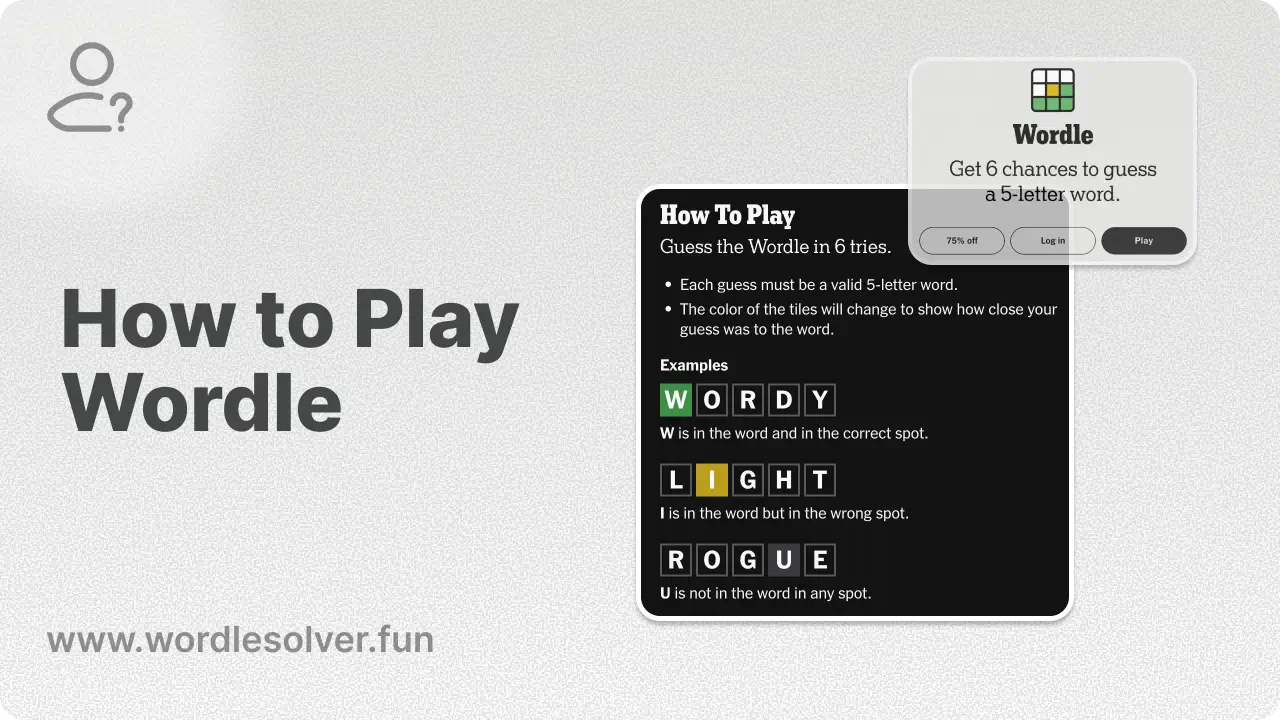
How to Play Wordle: Complete Beginner's Guide & Rules (2026)
Learn how to play Wordle step by step. Understand the rules, color tiles (Green, Yellow, Gray), best starting words, and winning strategies for the free daily NYT word game.
Wordle Helper: How to Never Lose Again (2026 Ultimate Guide)
Discover the best Wordle helper tools and strategies to maintain your streak. Learn how to use solvers strategically, improve your skills, and never lose at Wordle again.
Complete Guide to Wordle 5 Letter Words: 12,000+ Five-Letter Words for Wordle (2026)
The ultimate guide to Wordle 5 letter words! Explore 12,000+ five-letter words categorized by pattern, frequency, and Wordle usage. Find the perfect word for any puzzle.