Wordle Word Origins: Etymology Behind the Answers (2026)
Wordle Word Origins: The Etymology Behind the Answers
Every Wordle answer has a history.
Some words come from Latin. Others from French, Greek, or Old English.
Understanding word origins makes you a better solver—and a smarter player.
This guide explores the etymology behind common Wordle answers.
Why Etymology Helps in Wordle
Pattern Recognition
Words from similar origins share patterns:
Knowing origins helps predict letter combinations.
Vocabulary Expansion
Etymology connects words. Learn one root, unlock many words.
Example: Latin "scrib" (to write)
Now you won't forget these exist.
Uncommon Word Recognition
PARER stumped many players. But knowing -ER agent nouns come from French helps.
PARE + ER = one who pares = PARER
Etymology makes obscure words logical.
Word Origins by Language
Latin-Origin Words (~30% of Wordle Answers)
Latin gave English thousands of words. Many five-letter words are Latin-derived.
| Word | Latin Root | Meaning |
|------|-----------|---------|
| JUDGE | judicare | to judge |
| PLANT | planta | sprout |
| VIGOR | vigere | to be strong |
| VOCAL | vox, vocis | voice |
| SOLAR | sol | sun |
| LUNAR | luna | moon |
| URBAN | urbs | city |
| MOTOR | movere | to move |
| GRADE | gradus | step |
| LABOR | laborare | to work |
Pattern: Latin words often feel "formal" or "technical."
French-Origin Words (~25% of Wordle Answers)
French heavily influenced English after 1066. Many common Wordle words came from French.
| Word | French Origin | Meaning |
|------|--------------|---------|
| GRACE | grâce | favorableness |
| ROYAL | royal | kingly |
| BEAST | beste | animal |
| PAINT | peindre | to paint |
| JUICE | jus | juice |
| SAUCE | sauce | sauce |
| BLAME | blasmer | to blame |
| CHASE | chacier | to hunt |
| FEAST | feste | festival |
| COAST | coste | side, coast |
Pattern: French words often relate to government, food, art, and culture.
Germanic/Old English Words (~35% of Wordle Answers)
The oldest English words often have Germanic roots. They're usually simple and common.
| Word | Old English | Meaning |
|------|-------------|---------|
| WATER | wæter | water |
| HOUSE | hūs | house |
| STONE | stān | stone |
| CHILD | cild | child |
| LIGHT | lēoht | light |
| NIGHT | niht | night |
| SLEEP | slǣp | sleep |
| BREAD | brēad | bread |
| SHEEP | scēap | sheep |
| GREEN | grēne | green |
Pattern: Germanic words are short, concrete, and everyday.
Greek-Origin Words (~5% of Wordle Answers)
Greek gave English many scientific and technical terms.
| Word | Greek Root | Meaning |
|------|-----------|---------|
| GRAPH | graphein | to write |
| CYCLE | kyklos | circle |
| PHONE | phōnē | sound |
| CHAOS | khaos | void |
| DRAMA | drama | action |
| SCOPE | skopein | to look |
| LOGIC | logikē | reasoning |
| MUSIC | mousikē | art of the Muses |
| GIANT | gigas | giant |
| PANIC | panikos | relating to Pan |
Pattern: Greek words often have PH, CH, Y, and appear in "smart" vocabulary.
Etymological Patterns in Wordle
The -TION Ending
Latin suffix meaning "act of" or "state of":
(Note: Most -TION words exceed 5 letters, but derived forms appear.)
The -MENT Ending
Latin suffix meaning "result of":
The -LESS Ending
Germanic suffix meaning "without":
The -ER Agent Noun
Words ending in -ER often mean "one who does X":
| Word | Meaning |
|------|---------|
| BAKER | one who bakes |
| PARER | one who pares |
| MINER | one who mines |
| DINER | one who dines |
| CIDER | (exception—drink) |
This pattern explains PARER: If PARE is a verb, PARER can exist.
Double Vowel Patterns
Double vowels often come from Old English or French:
| Pattern | Origin | Examples |
|---------|--------|----------|
| OO | Old English | FLOOD, BLOOD |
| EE | Old English | TEETH, GEESE |
| EA | Old English | BREAD, STEAK |
Word Families in Wordle
Learning word families expands your mental dictionary.
The WRITE Family (Latin: scribere)
The MOVE Family (Latin: movere)
The LIGHT Family (Germanic/Latin mix)
Uncommon Wordle Answers Explained
CACAO (Spanish from Nahuatl)
From Aztec "cacahuatl" (cacao beans).
Now you know why it's CACAO (the bean) not COCOA (the processed drink).
FOYER (French)
From French "foyer" meaning hearth or home.
The entry room where you'd warm by the fire.
KAYAK (Inuit)
From Inuit "qajaq."
One of few English words from Greenlandic Inuit.
FJORD (Norwegian)
From Old Norse "fjǫrðr."
Borrowed directly into English.
FAQ
Why does etymology help with Wordle?
Understanding word origins reveals spelling patterns, helps you remember obscure words, and expands vocabulary systematically.
What language do most Wordle words come from?
Three main sources: Germanic/Old English (~35%), French (~25%), and Latin (~30%). Greek contributes ~5%.
Are there non-European words in Wordle?
Yes. CACAO (Nahuatl), KAYAK (Inuit), and others come from non-European languages.
How do I learn etymology efficiently?
Start with common roots:
Does knowing etymology guarantee wins?
No. But it helps with obscure words and vocabulary expansion over time.
Where can I learn more about word origins?
Etymonline.com is excellent. Dictionary.com also shows origins.
Summary
Wordle answers come from diverse origins:
Understanding these patterns helps you:
1. Recognize unusual spellings
2. Remember obscure words
3. Predict letter combinations
4. Expand vocabulary systematically
Etymology turns confusion into understanding.
Next time PARER stumps you, remember: PARE + ER = one who pares.
Simple when you know the pattern.

Author
Md Sahadat Husain
Algorithm Expert & Lead Developer | Wordle Strategy Analyst | CCIE
I am a Computer Engineer and Competitive Programmer with a deep passion for algorithms. I built this Wordle Solver using Information Theory and Entropy Analysis to help players understand the probability math behind the game—guaranteeing smarter guesses and longer streaks.
As a Web Developer III at WPManageninja and a Cisco Certified Internetwork Expert (CCIE), I specialize in building high-performance applications. I apply this engineering rigor to ensure our solver is the fastest and most accurate on the web.
I am also the Founder of NextProTips, Devsdemy, and Top10Bests.com, teaching programming to over 100,000 students on YouTube and Udemy.
Ready to Solve Today's Wordle?
Use our powerful Wordle solver to find the perfect word and maintain your winning streak!
Popular Tools & Resources
Related Articles
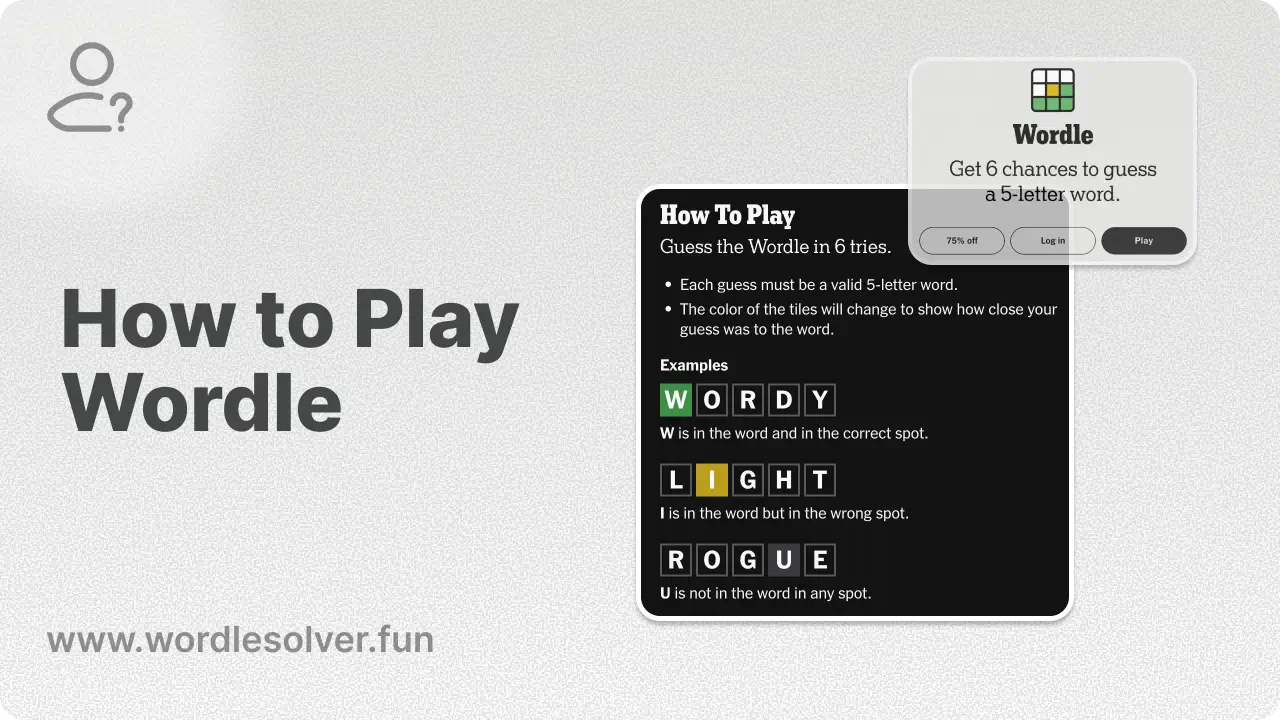
How to Play Wordle: Complete Beginner's Guide & Rules (2026)
Learn how to play Wordle step by step. Understand the rules, color tiles (Green, Yellow, Gray), best starting words, and winning strategies for the free daily NYT word game.
Wordle Helper: How to Never Lose Again (2026 Ultimate Guide)
Discover the best Wordle helper tools and strategies to maintain your streak. Learn how to use solvers strategically, improve your skills, and never lose at Wordle again.
Complete Guide to Wordle 5 Letter Words: 12,000+ Five-Letter Words for Wordle (2026)
The ultimate guide to Wordle 5 letter words! Explore 12,000+ five-letter words categorized by pattern, frequency, and Wordle usage. Find the perfect word for any puzzle.