Wordle's Hardest Words: Why Some Puzzles Stump Everyone (2026)
Wordle's Hardest Words: What Makes Some Puzzles Nearly Impossible
Some Wordle puzzles break the internet.
Players fail in record numbers. Social media explodes with frustration.
Why do certain words cause mass failure while others feel easy?
This guide analyzes the hardest Wordles ever—and reveals what makes them so difficult.
The Hardest Wordle Answers (By Fail Rate)
Data-Backed Rankings
Based on social media analysis and reported scores, these words caused the highest failure rates:
| Word | Date | Est. Fail Rate | Why It Was Hard |
|------|------|----------------|-----------------|
| PARER | July 2023 | ~25% | Obscure word, double R |
| SWILL | Dec 2023 | ~22% | Uncommon word |
| MUMMY | Feb 2024 | ~20% | Triple M trap |
| FOYER | Apr 2022 | ~18% | Unusual Y placement |
| WATCH | Oct 2023 | ~18% | -ATCH trap |
| VIVID | May 2024 | ~17% | Double V, double I |
| CACAO | May 2022 | ~15% | Double A, obscure |
| NYMPH | May 2022 | ~14% | No vowels |
What They Share
Hard Wordles typically have:
1. Unusual letters (V, Y, W in odd spots)
2. Double letters
3. Obscure vocabulary
4. Common letter patterns with many options
Why Some Words Break Players
1. Pattern Traps
Words ending in common patterns have too many possibilities.
Example: -ATCH
Answer: WATCH
But players guess:
Six options. Six guesses. Not enough room for error.
2. Double/Triple Letters
Players don't expect repeats until it's too late.
Example: MUMMY
By the time you realize M repeats, you've burned guesses.
3. Obscure Vocabulary
PARER stumped players because:
4. Missing Common Letters
NYMPH has no true vowels (Y functions as one).
Standard openers miss entirely:
Players waste 2-3 guesses before finding anything.
5. Unusual Letter Placement
FOYER places Y in position 4—unusual for English.
Players who found F, O, E, R couldn't place them correctly.
Case Studies: Dissecting Hard Puzzles
Case 1: PARER (July 2023)
The Problem:
Why Players Failed:
Lesson: Obscure -ER words exist. RACER, FACER, PACER—expand your vocabulary.
Case 2: SWILL (December 2023)
The Problem:
Why Players Failed:
Lesson: When you have the letters but nothing fits, check for doubles.
Case 3: CACAO (May 2022)
The Problem:
Why Players Failed:
Lesson: Plant-based and food origin words appear more than expected.
Patterns That Signal Difficulty
High-Failure Letter Combos
Watch out when you see:
| Pattern | Risk Level | Examples |
|---------|------------|----------|
| _IGHT | Very High | LIGHT, SIGHT, MIGHT, etc. |
| _OUND | Very High | SOUND, ROUND, WOUND, etc. |
| _ATCH | High | WATCH, CATCH, HATCH |
| _RILL | High | DRILL, GRILL, TRILL |
| Double vowels | Medium-High | TEETH, GEESE |
Low-Risk Patterns
Some patterns have few options:
These are actually easier because options are limited.
Strategies for Hard Puzzles
1. Recognize Trap Patterns Early
If you see -IGHT forming by guess 2, change tactics.
Use guess 3 to test differentiating letters (L, M, R, N, S, T).
2. Consider Obscure Words Earlier
When common words don't fit, stop forcing them.
Ask: "What five-letter word do I never use?"
3. Test for Doubles Proactively
By guess 3, if nothing fits, assume a double exists.
Guess a word with likely repeats (L, E, O, S, T).
4. Learn From Historical Hard Puzzles
Review past Wordle answers to see which words stumped players.
Pattern recognition improves with exposure.
5. Use a Solver When Stuck
Tools like our Wordle Solver show remaining possibilities.
If you see 20+ options, you know it's a hard puzzle.
The Psychology of Hard Wordles
Anchoring Bias
You find CLOUT pattern: C__U_
Your brain locks onto CLOUT. You can't see CROUP, CROUT.
Fix: List multiple possibilities before guessing.
Common Word Bias
PAPER feels more "Wordle-like" than PARER.
But Wordle uses both common and uncommon words.
Fix: Don't assume Wordle picks the obvious answer.
Sunk Cost Fallacy
You've guessed 4 times toward MATCH. It must be MATCH!
Wrong. But you can't let go.
Fix: Evaluate fresh each guess. Past guesses don't make one answer "more likely."
FAQ
What's the hardest Wordle ever?
PARER (July 2023) had the highest reported failure rate at ~25%.
Are hard Wordles intentional?
No. The NYT curates the list, but difficulty is based on word properties, not deliberate difficulty.
Can I see today's Wordle difficulty before playing?
No. But looking at letter patterns after guess 2 indicates difficulty.
What makes a puzzle easy?
Common words with high-frequency letters, no doubles, and unique patterns. CRANE, TRAIN, STORY are easy.
Should I prepare differently for hard puzzles?
Use the same strategy. Good players handle hard puzzles better because their process works regardless.
How do I recover from a bad start?
Don't panic. Use your next guess to test new, common letters. Information recovery is possible through guess 4.
Preparing for Hard Puzzles
You can't know which puzzles will be hard.
But you can prepare:
Hard puzzles happen. The goal isn't to win every game—it's to maximize your chances.
Summary
Hard Wordles share common traits:
To handle them:
1. Recognize trap patterns by guess 2
2. Consider doubles by guess 3
3. Don't anchor on common words
4. Build vocabulary outside Wordle
Every player fails occasionally. The best players fail less—because they spot difficulty before it's too late.
Keep playing. Keep learning. The hard puzzles make victories sweeter.

Author
Md Sahadat Husain
Algorithm Expert & Lead Developer | Wordle Strategy Analyst | CCIE
I am a Computer Engineer and Competitive Programmer with a deep passion for algorithms. I built this Wordle Solver using Information Theory and Entropy Analysis to help players understand the probability math behind the game—guaranteeing smarter guesses and longer streaks.
As a Web Developer III at WPManageninja and a Cisco Certified Internetwork Expert (CCIE), I specialize in building high-performance applications. I apply this engineering rigor to ensure our solver is the fastest and most accurate on the web.
I am also the Founder of NextProTips, Devsdemy, and Top10Bests.com, teaching programming to over 100,000 students on YouTube and Udemy.
Ready to Solve Today's Wordle?
Use our powerful Wordle solver to find the perfect word and maintain your winning streak!
Popular Tools & Resources
Related Articles
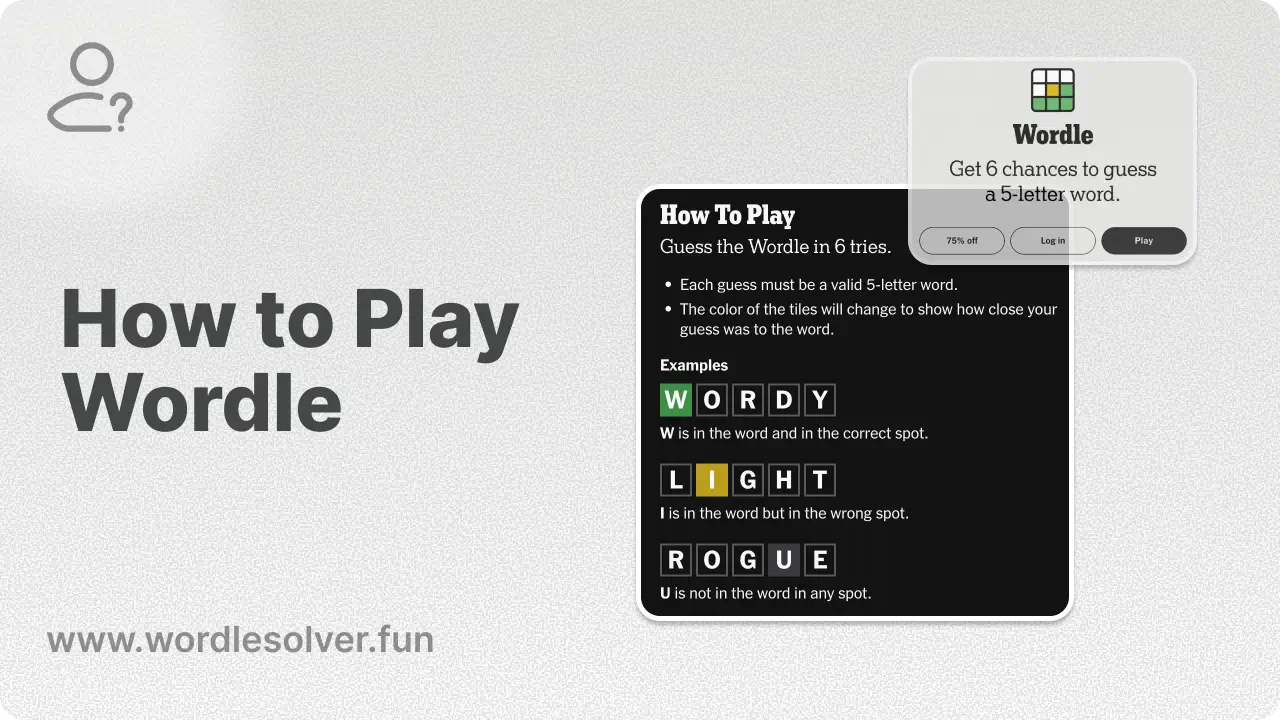
How to Play Wordle: Complete Beginner's Guide & Rules (2026)
Learn how to play Wordle step by step. Understand the rules, color tiles (Green, Yellow, Gray), best starting words, and winning strategies for the free daily NYT word game.
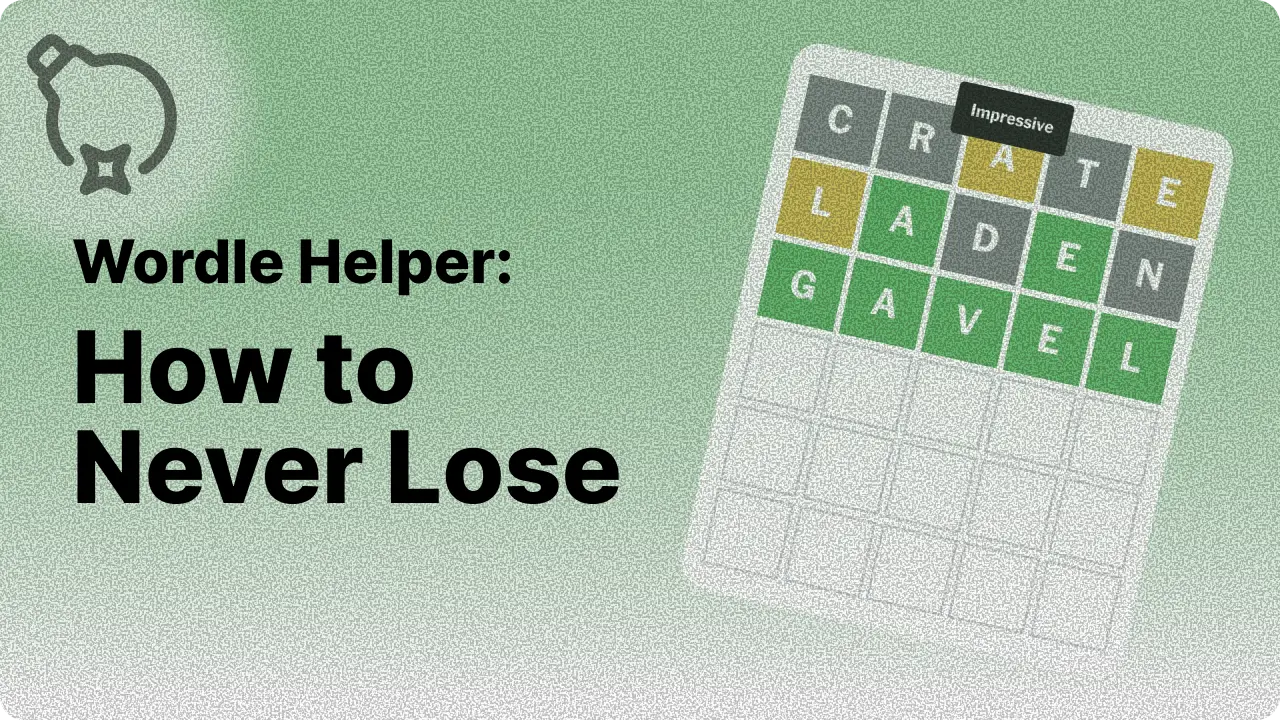
Wordle Helper: How to Never Lose Again (2026 Ultimate Guide)
Discover the best Wordle helper tools and strategies to maintain your streak. Learn how to use solvers strategically, improve your skills, and never lose at Wordle again.
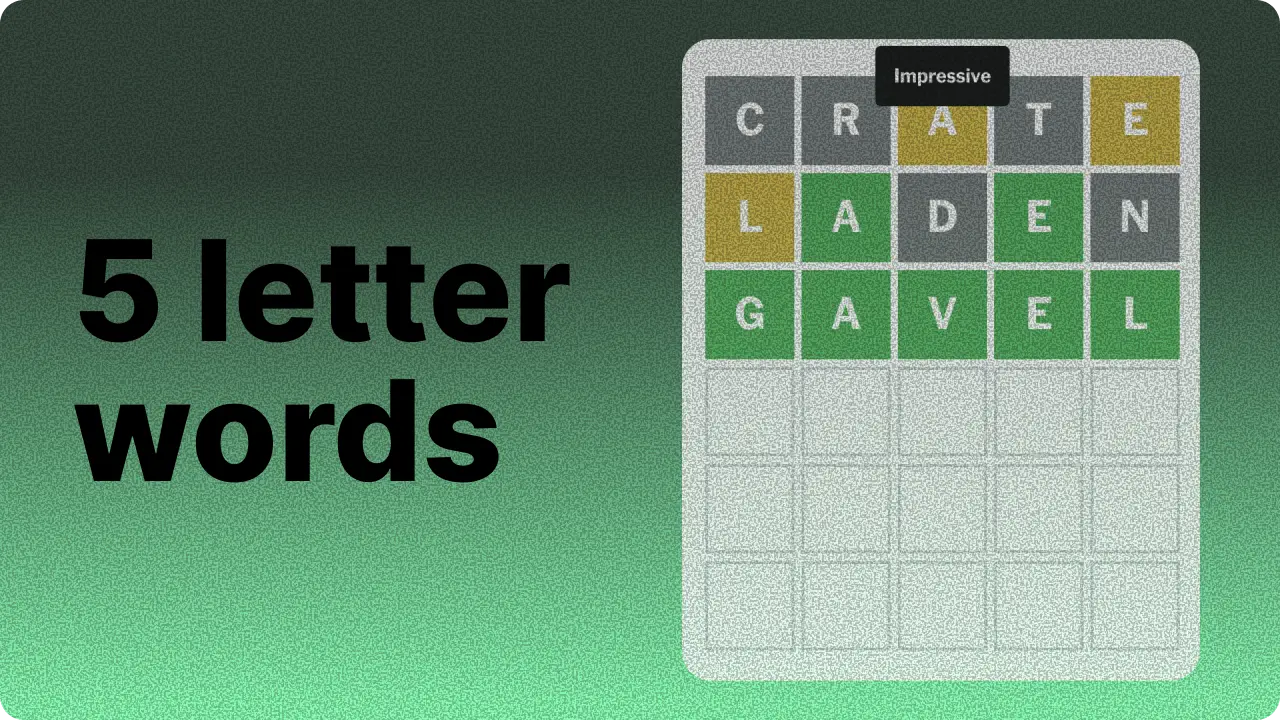
Complete Guide to Wordle 5 Letter Words: 12,000+ Five-Letter Words for Wordle (2026)
The ultimate guide to Wordle 5 letter words! Explore 12,000+ five-letter words categorized by pattern, frequency, and Wordle usage. Find the perfect word for any puzzle.