WordleBot Explained: What Your Score Means & How to Improve
WordleBot Explained: Understanding Your Wordle Score
You finished today's Wordle. Then WordleBot tells you: "Skill 78. Luck 45."
What does that even mean?
WordleBot is the New York Times' official Wordle analyzer. It evaluates every guess you make.
This guide explains exactly how it works—and how to get better scores.
What Is WordleBot?
WordleBot is an AI that analyzes your Wordle games.
After you solve (or fail) a puzzle, WordleBot shows:
It's available to NYT Games subscribers.
Skill vs Luck: What's the Difference?
Skill Score (0-99)
Measures how well you played given your information.
High skill (80+): You picked optimal or near-optimal guesses.
Medium skill (50-79): Some guesses were suboptimal.
Low skill (below 50): You made inefficient choices.
Skill compares your guesses to what the "best" guess would be at each step.
Luck Score (0-99)
Measures how favorable the puzzle was for you.
High luck (70+): The answer revealed itself quickly.
Low luck (below 40): The puzzle was harder than average.
Luck accounts for things outside your control:
The Relationship
You can have:
How WordleBot Calculates Your Score
Step 1: Expected Remaining Guesses
At each step, WordleBot calculates how many guesses you should need to finish.
Your starting word determines your "expected guesses" from the start.
Step 2: Optimal Guess Comparison
WordleBot compares your guess to the best possible guess.
If you picked a top-tier option, you score well. If not, your skill drops.
Step 3: Pattern Evaluation
Some patterns are harder than others.
_IGHT has 7+ common words. That's unlucky. Your score reflects this.
Step 4: Final Calculation
Your skill combines all decisions. Your luck combines all patterns.
Why WordleBot Might Disagree With You
You Prioritized Fun Over Efficiency
Maybe you guessed a fun word instead of CRATE. That's fine—but WordleBot notices.
You Used a "Safe" Guess
Sometimes testing new letters feels safer than committing.
WordleBot might prefer a riskier guess that had higher expected value.
Position Matters
Guessing a word with good letters in bad positions scores lower than optimal placement.
How to Improve Your Skill Score
1. Use Proven Starters
Words like CRATE, SLATE, and CRANE score highest.
Starting with AUDIO or MOIST hurts your ceiling.
2. Eliminate Aggressively Early
Don't repeat confirmed information too early.
Guess 2 should test NEW letters (unless you're close to solving).
3. Think in Probabilities
Ask: "Which word eliminates the most possibilities?"
Not: "Which word could be the answer?"
4. Learn From WordleBot Feedback
After each game, review its suggestions.
What did it recommend? Why was that better?
5. Practice Pattern Recognition
Common patterns have common solutions.
Learn what words fit _IGHT, _OUND, _ATCH patterns.
WordleBot's Recommended Words
Top Starting Words
WordleBot ranks openers by expected solve rate.
| Word | Expected Guesses |
|------|------------------|
| CRANE | 3.68 |
| SLATE | 3.69 |
| CRATE | 3.68 |
| TRACE | 3.70 |
| SALET | 3.42 (theoretically optimal) |
SALET scores best mathematically but isn't commonly suggested because it's obscure.
Best Second Guesses
After your opener, WordleBot evaluates your second guess.
A good second guess:
Common WordleBot Misconceptions
"My 3-guess solve should be 99 skill"
Not necessarily.
If you got lucky and guessed correctly without optimal strategy, your skill might be lower.
Skill measures process. Luck measures outcome.
"WordleBot is always right"
WordleBot uses statistics. It doesn't know every strategy.
Sometimes creative plays work better in practice.
"I should always follow WordleBot's suggestion"
For maximum scores, yes.
For enjoyment, do what you want. The bot's there to help, not dictate.
Interpreting Your Results
After a 3-Guess Win
Check your skill.
After a 4-Guess Win
Normal outcome. Check if guess 2 or 3 could improve.
After a 5-6 Guess Win
Review where you lost efficiency.
Usually it's:
After a Loss
Happens to everyone. Check what WordleBot would have done differently.
Settings That Affect WordleBot
Hard Mode
WordleBot evaluates Hard Mode separately.
Hard Mode games often have lower luck scores (more pattern traps).
Normal vs. Hard Comparison
You can toggle between modes in WordleBot's settings to see how each would score.
FAQ
Is WordleBot free?
No. It requires a NYT Games subscription.
Can WordleBot see tomorrow's answer?
No. It analyzes your game after you play.
Does WordleBot work on mobile?
Yes. It appears after you finish a puzzle in the NYT Games app.
What's a good skill score?
70+ is solid. 85+ is excellent. 95+ means you made near-perfect choices.
What's a good luck score?
Luck is outside your control. Don't worry about it. High luck just means an easier puzzle.
Why is my skill low when I solved in 3?
You might have guessed correctly by luck rather than optimal strategy. Skill measures decision quality, not result.
How does WordleBot compare to other solvers?
WordleBot is NYT's official analyzer. Our Wordle Solver helps you during games. They serve different purposes.
Should You Care About WordleBot?
That depends on you.
If you want to improve:
Yes. WordleBot shows exactly where to get better.
If you play for fun:
Ignore it. Enjoy Wordle your way.
If you're competitive:
Use it to benchmark against friends and track progress.
Summary
WordleBot measures skill (your decisions) and luck (the puzzle's difficulty).
To improve:
High skill comes from practice. Luck is random.
Play enough games, and your skill will trend upward—even when luck doesn't cooperate.
Good luck (literally).

Author
Md Sahadat Husain
Algorithm Expert & Lead Developer | Wordle Strategy Analyst | CCIE
I am a Computer Engineer and Competitive Programmer with a deep passion for algorithms. I built this Wordle Solver using Information Theory and Entropy Analysis to help players understand the probability math behind the game—guaranteeing smarter guesses and longer streaks.
As a Web Developer III at WPManageninja and a Cisco Certified Internetwork Expert (CCIE), I specialize in building high-performance applications. I apply this engineering rigor to ensure our solver is the fastest and most accurate on the web.
I am also the Founder of NextProTips, Devsdemy, and Top10Bests.com, teaching programming to over 100,000 students on YouTube and Udemy.
Ready to Solve Today's Wordle?
Use our powerful Wordle solver to find the perfect word and maintain your winning streak!
Popular Tools & Resources
Related Articles
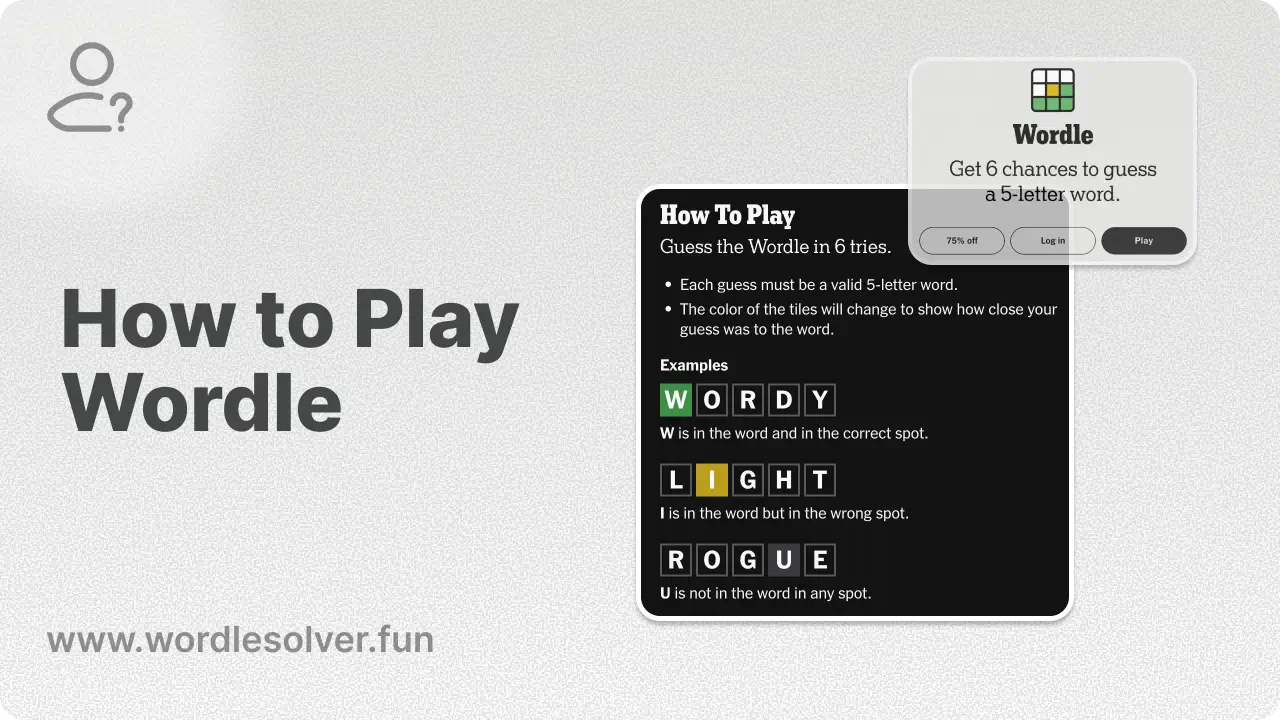
How to Play Wordle: Complete Beginner's Guide & Rules (2026)
Learn how to play Wordle step by step. Understand the rules, color tiles (Green, Yellow, Gray), best starting words, and winning strategies for the free daily NYT word game.
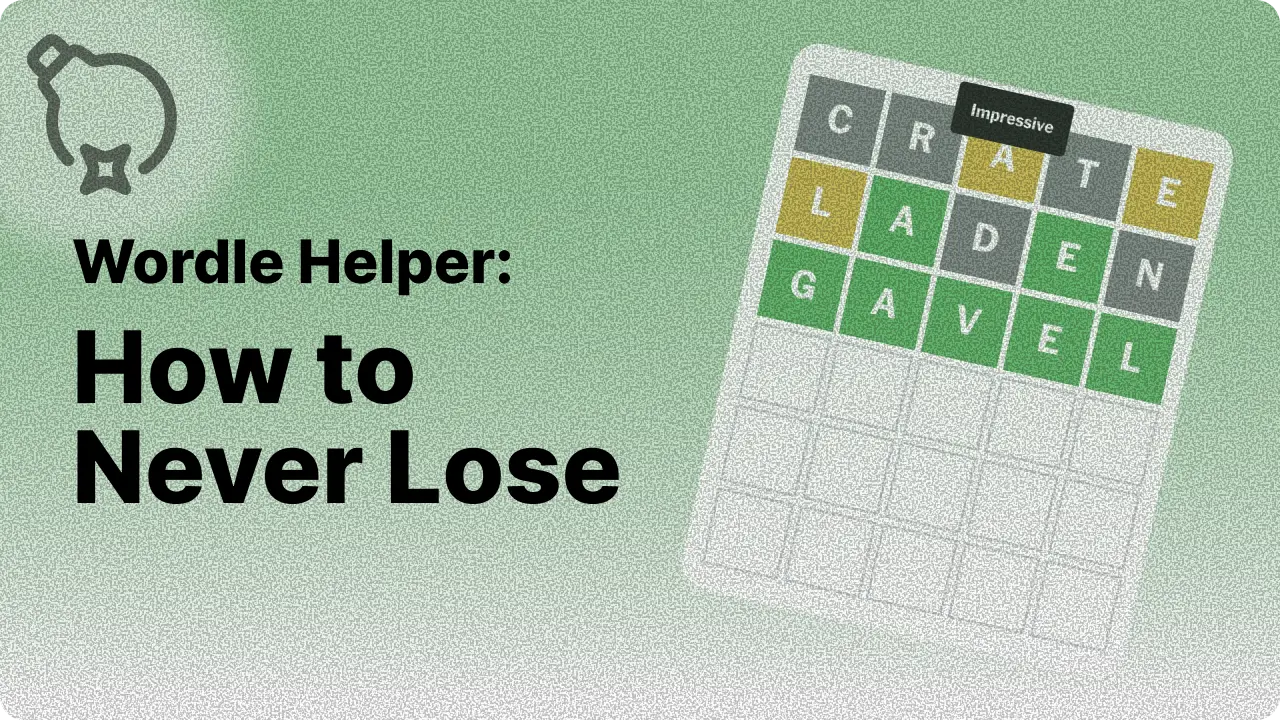
Wordle Helper: How to Never Lose Again (2026 Ultimate Guide)
Discover the best Wordle helper tools and strategies to maintain your streak. Learn how to use solvers strategically, improve your skills, and never lose at Wordle again.
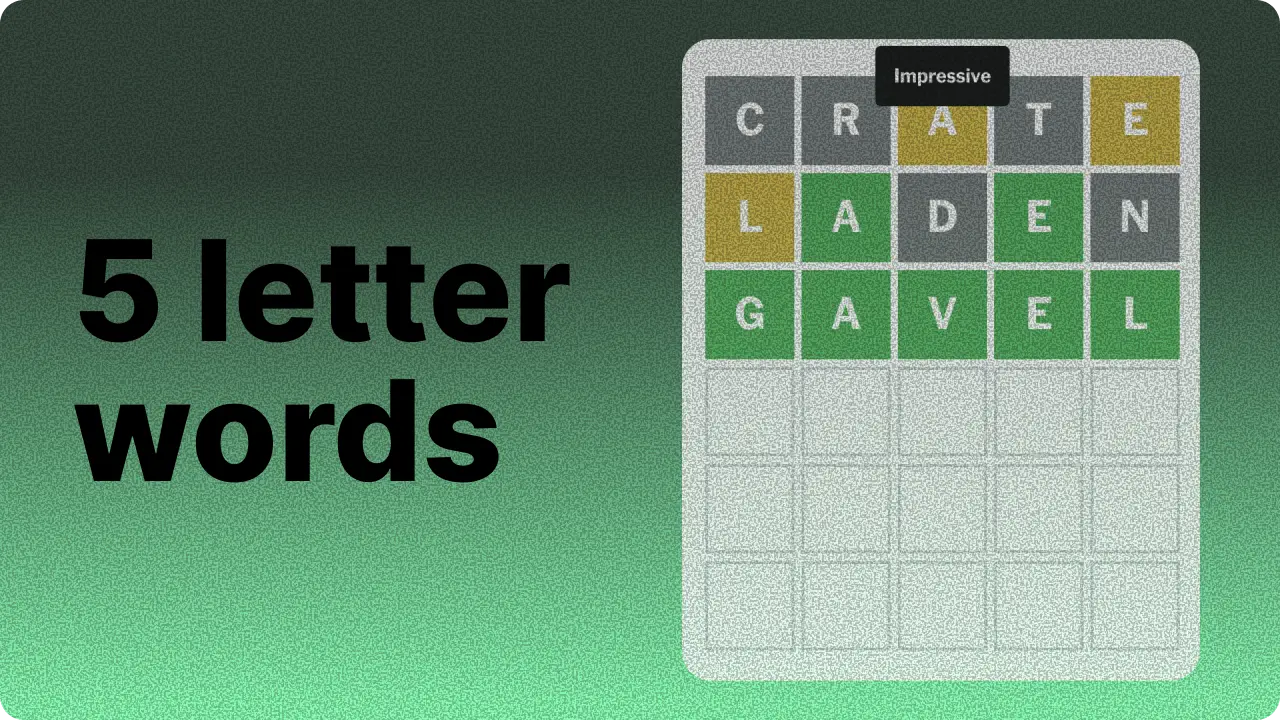
Complete Guide to Wordle 5 Letter Words: 12,000+ Five-Letter Words for Wordle (2026)
The ultimate guide to Wordle 5 letter words! Explore 12,000+ five-letter words categorized by pattern, frequency, and Wordle usage. Find the perfect word for any puzzle.